Where Cybersecurity Awareness Training Quietly Drifts Off Course
October 15, 2026

When in-house training content isn’t updated on a fixed schedule, employees can end up trusting advice that no longer matches current threats. This quiet drift can actually widen the security gap the training was meant to close.
Picture a Charlotte firm that trains every new hire to flag suspicious emails, then never touches that material again. Two years pass. The scams have moved on; the slides haven't.
That gap is more common than it sounds, because most companies build their own training and treat it as finished once it's live. Two-thirds of organizations say they build at least some of their required training content in-house, and 80% update it at least once a year. Updating "at least once a year" sounds responsible, yet a once-a-year touch-up often means small edits rather than a real overhaul, so the update cycle is looser than the statistic suggests.
Left on that loose schedule, internally built content drifts quietly out of date while employees keep following what they learned, assuming it still holds. Cyber threats don't wait for the next review, so guidance that worked last year can miss what's actually targeting an inbox today.
Put simply: outdated training leaves employees confident in advice that no longer matches the threats they face. That confidence is exactly how a well-meaning program ends up widening the gap it was supposed to close.
Cybersecurity awareness training exists to close knowledge gaps, so when it stalls, it starts opening new ones instead. Seeing how that happens is the first step toward fixing it.

How in-house training content becomes stale
Building a security awareness training program in-house offers real flexibility, letting the material fit a team's specific work. That same flexibility, though, carries a hidden cost: without a strict update schedule, the content quietly falls behind.
Because in-house material tends to reflect the threats a team already knows, it often keeps warning about scams and attack methods that have since faded from use. New tactics emerge faster than the content is revisited, so the two drift apart.
Employees, meanwhile, trust what they're taught, and if the advice looks the same year after year, they have no reason to suspect it's fallen short. That trust breeds a false sense of security, which makes new risks harder to notice precisely because nothing about the training signals that anything has changed.
The longer a program goes without a full review, the more recent attack trends it misses entirely. A tweaked slide or a fresh example here and there doesn't fix that; the core message can stay outdated even while the surface looks maintained. That's precisely how the gaps take hold.
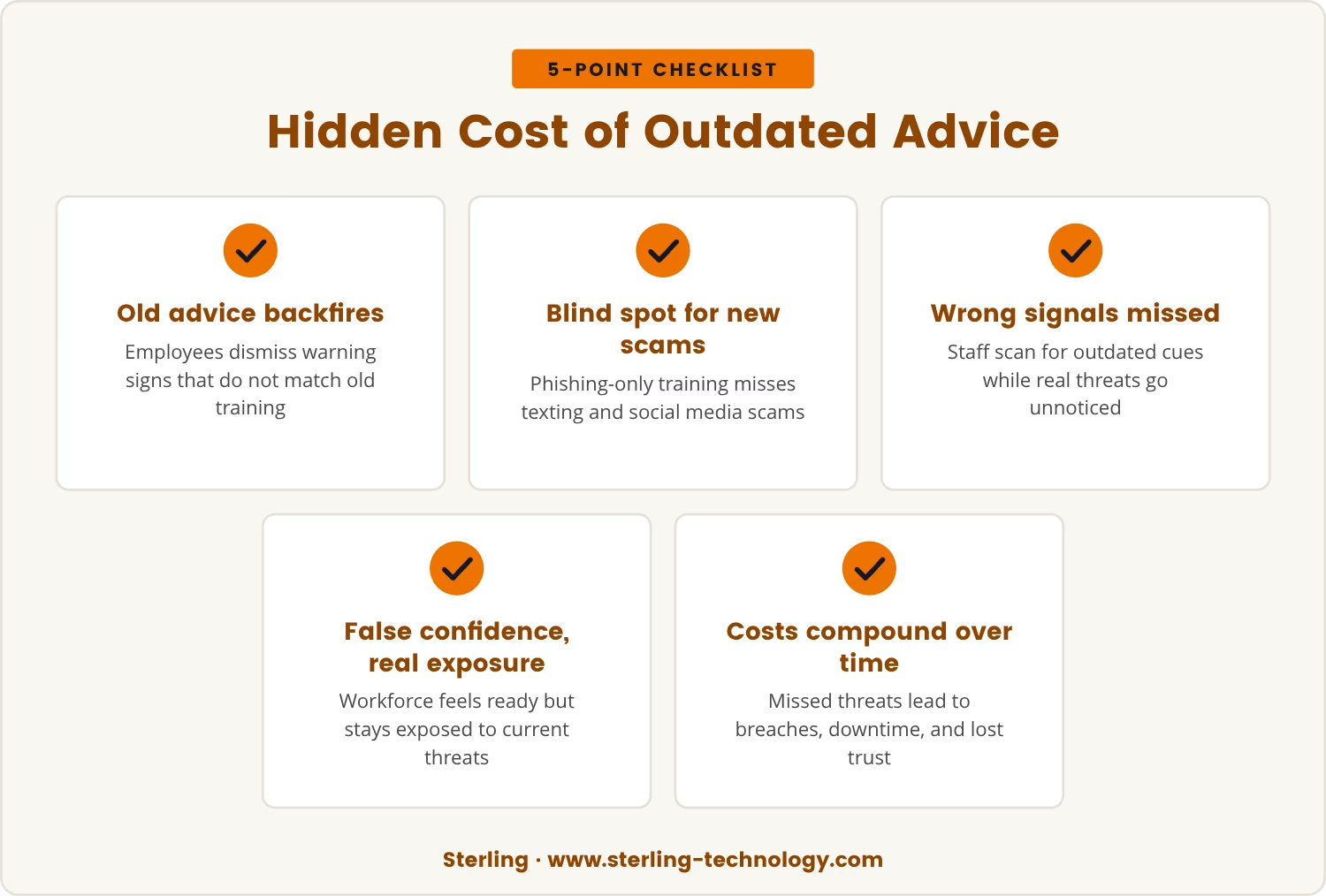
The hidden cost of outdated advice
Outdated training does more than fail to protect: it can actively work against the people relying on it. Employees following old advice tend to dismiss warning signs that don't match what they were taught to expect.
Consider a program still centered on email phishing that never mentions text-message scams or social engineering run through social media. Employees scanning for the wrong signals will miss the real threat standing in front of them.
That mismatch between training and reality translates directly into more successful attacks, leaving a workforce that feels ready while remaining exposed to what's actually happening now.
The costs compound from there: missed threats turn into data breaches, breaches into downtime, and downtime into lost customer trust. Every dollar spent on training that no longer matches real risks is a dollar spent maintaining a false sense of readiness.
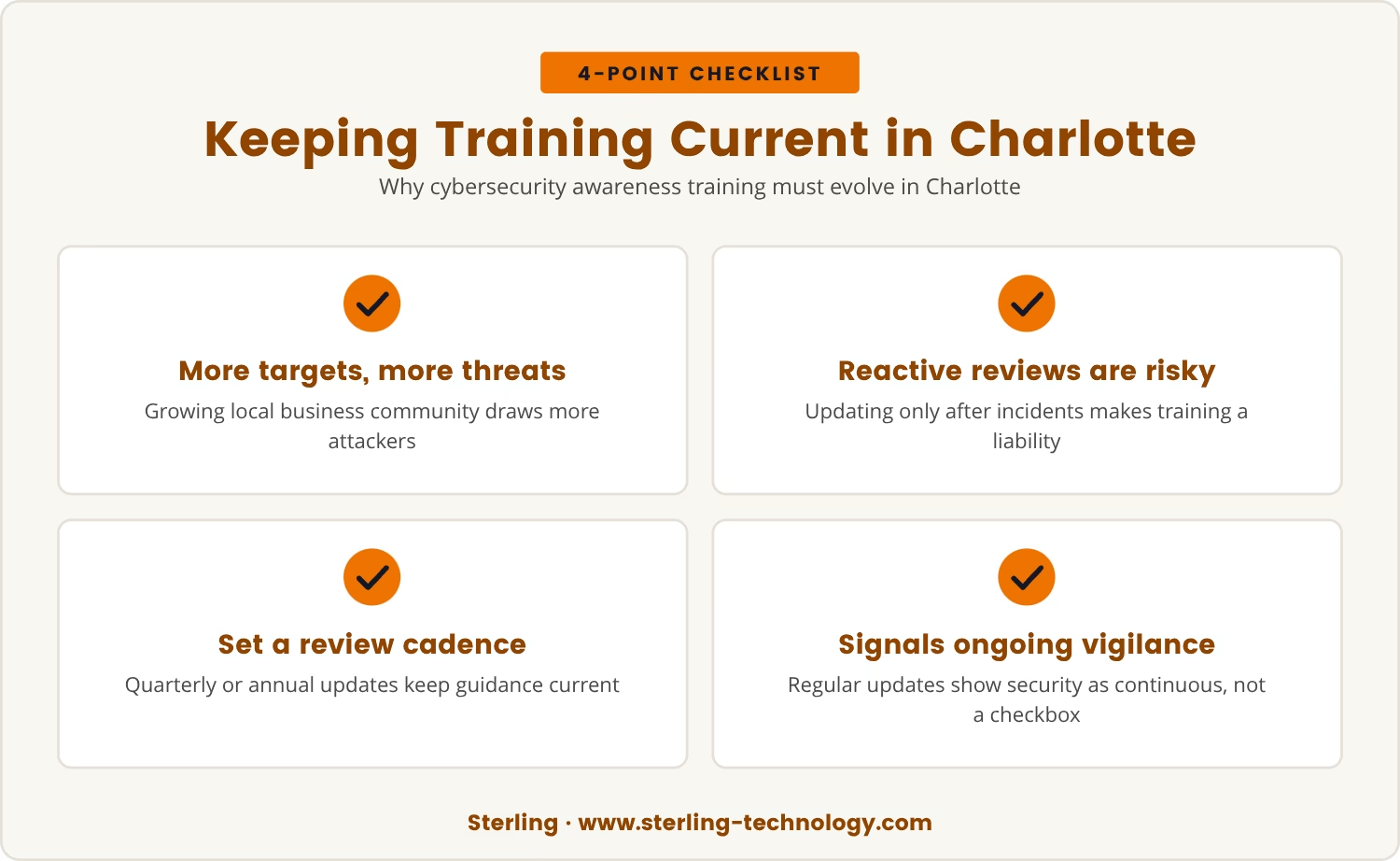
Why cybersecurity awareness training must evolve in Charlotte
Charlotte businesses face the same fast-moving threat landscape as companies anywhere else, and many of them build their own training content because it feels like more control. That sense of control, though, only holds if the update cycle keeps pace with what's changing outside.
Without a fixed schedule, the approach backfires: a growing local business community means more targets for attackers, and new threats surface constantly. Training that stands still leaves employees a step behind the risks they're actually meeting.
A security awareness training program reviewed only "when there's time," or worse, only after something goes wrong, is already a liability. A set cadence, quarterly or at minimum annual, is what keeps the guidance actually current.
Consistent updates do more than patch content; they signal to employees that security is an ongoing practice rather than an annual checkbox, and that shift in mindset is what keeps people alert between reviews.
What happens when employees trust outdated guidance
Employees generally want to do the right thing, so when they finish cybersecurity awareness training, they walk away believing they're prepared. That belief turns into a liability the moment the advice behind it has quietly expired.
- False sense of security: Employees may believe they're protected, even when new threats have emerged.
- Missed warning signs: Outdated advice can cause staff to overlook modern attack methods.
- Resistance to change: When people trust old guidance, they may ignore new warnings or updates.
- Increased vulnerability: Attackers know which tactics are no longer covered in standard training.
- Wider security gaps: The gap between what employees know and what they need to know grows over time.
This pattern rarely announces itself until an incident forces the issue, and by then the damage is already done.
Signs your training content needs a refresh
Spotting outdated cybersecurity training isn't always straightforward, but a few warning signs tend to show up consistently.
A review that hasn't happened in over a year, or one replaced by scattered minor edits, is the first clue that content has fallen behind. Employees asking about threats the training never covers is another, since it means the material has stopped matching what people are actually running into.
Attacks built around mobile devices or cloud services going unmentioned in the program point in the same direction, as do examples and scenarios that feel like they belong to an earlier era.
And when completion rates stay high while security incidents keep happening anyway, the shortfall usually isn't participation. It's the advice itself no longer holding up.
How to keep your security awareness training program current
A strong security awareness training program does more than cover the basics; it keeps adapting as the threats around it change. The steps below outline how to keep it that way.
Set a fixed update schedule
Review and update training content at set intervals, whether every six months or every twelve. Put the dates on the calendar and treat them as fixed, not optional.
Monitor new cyber threats
Track evolving attack trends through trusted sources so the training reflects tactics currently being used against businesses like the one it's protecting.
Gather employee feedback
Ask staff what confuses them and what new threats they're hearing about elsewhere, since their questions often expose gaps the current material misses.
Test for real-world effectiveness
Run phishing simulations or scenario-based exercises to see whether employees actually catch new attack types, then let the results steer what gets updated.
Involve outside experts
Bring in a cybersecurity professional to review the content periodically; an outside perspective tends to catch blind spots that internal reviewers miss.
Update examples and scenarios
Swap old case studies for recent incidents so the situations employees train on resemble what they're actually likely to face now.
Communicate changes clearly
Explain why each update matters when it rolls out, so employees understand security guidance as something that keeps moving rather than something finished once and left alone.
The real risk: Trusting advice that no longer fits
The deeper danger isn't that employees are unprepared; it's that they believe otherwise. Once training content falls behind, the trust employees place in it turns into the very weakness it was meant to prevent.
That misplaced trust doesn't show up on a dashboard, but its effects are concrete: missed threats, slower responses, and a widening distance between what a team knows and what attackers are actually doing. A security program can drift like this for a long stretch while everyone involved assumes it's working exactly as intended.
If a full review hasn't happened recently, the question worth asking is simple: does the guidance your team follows still match the threats it's facing today?

When your team’s training may be out of date
If your business has 20 to 80 employees, you may be relying on in-house training that hasn’t been fully updated in a while. At Sterling, we understand how easy it is for well-meaning programs to drift out of sync with real threats.
We invite you to see how we approach keeping security training current, or to talk with us about your own setup and where it might need a refresh.
Is your security advice still current?
Get a response and resolution from our team in just 30 minutes, so you never have to wait long for help when your training or security advice needs an urgent update.
Frequently asked questions
How often should we update our security awareness training program?
Training content should be reviewed at least once a year, though updates every six months keep pace with new threats more reliably. Frequent reviews ensure employees are working from current information rather than advice that has quietly aged out.
What are the risks of using outdated cybersecurity awareness training for employees?
Outdated training leaves employees unaware of attack methods the material never covered, which widens a business's exposure to exactly those threats. It also breeds a false sense of security that raises the odds of a successful attack.
How do we know if our cybersecurity training is still effective?
Warning signs include employees asking about threats the training doesn't address, or security incidents continuing despite strong completion rates. Real-world testing scenarios and direct staff feedback both help confirm whether the content is still doing its job.
Can we rely on in-house training alone to cover all cyber threats?
In-house training can be tailored closely to an organization's needs, but it tends to fall behind the pace at which new cyber threats appear. Pairing it with outside expertise or industry updates helps close whatever gaps develop over time.
What is the best way to access the training updates our team needs?
Setting a fixed schedule for reviewing and refreshing training materials is the most reliable approach. Drawing on outside resources or a cybersecurity partner alongside that schedule helps make sure updates stay timely and relevant.

Landon Carter
Outside of work I enjoy traveling with my wife and son, helping coach little league baseball teams, and cheering on the Carolina Panthers.


