IT Support for CPA Firms: Is More Staff the Answer?
October 9, 2026

Hiring more help desk staff during tax season only treats the symptoms of recurring IT issues. Addressing the root software configuration problems is what actually reduces support needs and costs over time.
Picture a Charlotte CPA firm three weeks into tax season: the help desk queue is fifty tickets deep, half of them the same login error the team fixed last April. The partners approve two temporary hires. The queue barely moves.
That scenario points to a pattern worth examining, because those extra hands rarely touch the actual problem. Most of those fifty tickets trace back to the same handful of software misconfigurations, quietly reproducing themselves every time a deadline tightens. Adding staff to answer them faster doesn't make them stop happening; it just adds payroll to the same recurring fault.
Hire for the same problem every year and the workload never actually shrinks; it just gets rescheduled for next season. The fix that actually reduces the problem is the one aimed at the software itself, not the phone queue.

Why recurring IT issues keep returning every tax season
Every year brings the same short list of complaints: the same error messages, the same login failures, the same software glitches slowing the team down at the worst possible moment. Seen from a distance, these issues look like they have a life of their own.
They don't, though — they persist because nobody addressed what caused them. A workaround gets the afternoon back on track, but it does nothing to stop the same fault from resurfacing next week, and each repeat quietly drains staff hours that could have gone toward client work.
So instead of solving the problem, the firm ends up managing it indefinitely, and the support team spends its energy on the same fires rather than on improving the technology underneath them.
The hidden costs of seasonal help desk hiring
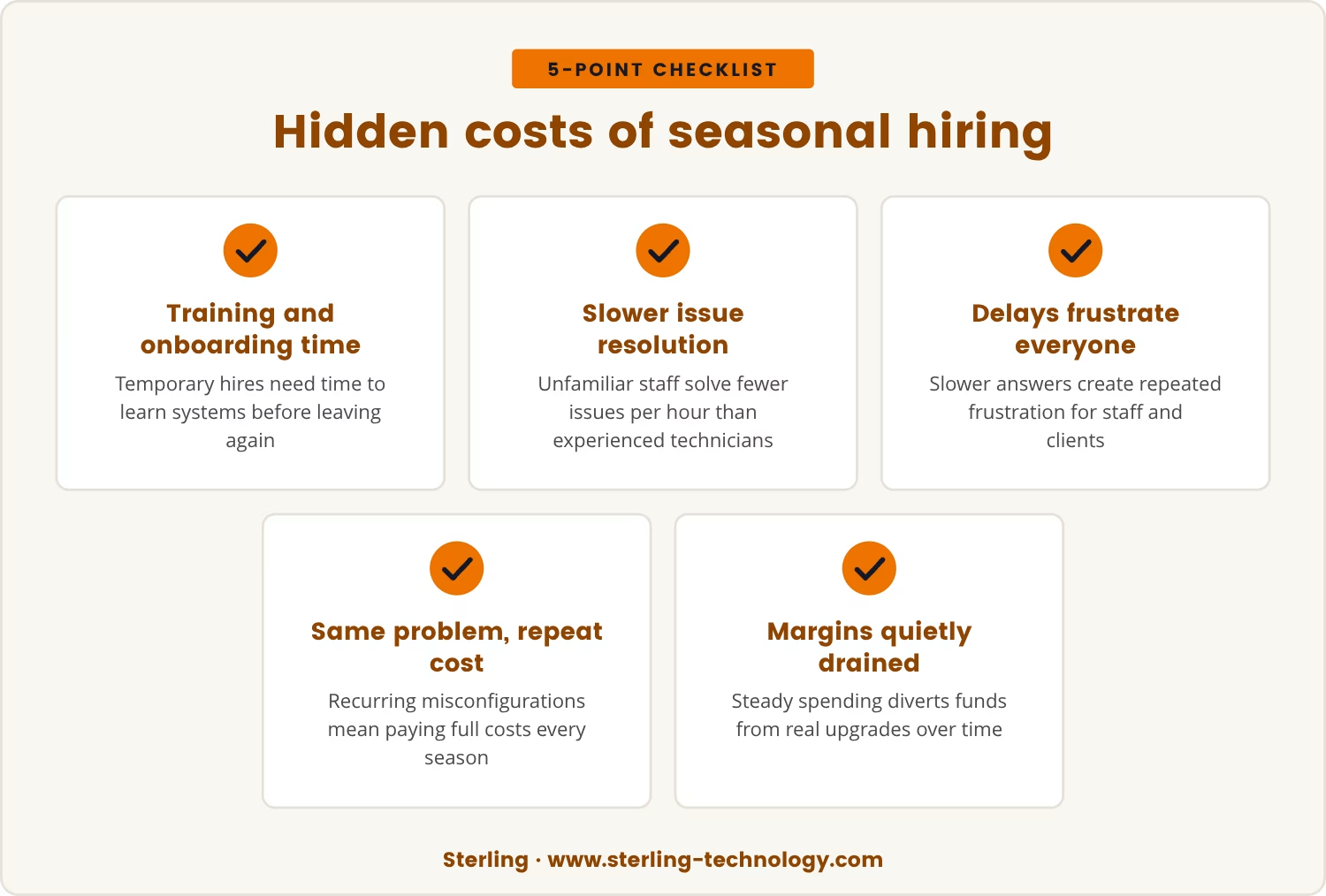
The sticker price of a seasonal hire is easy to calculate; the real cost is not. Every temporary hire also means time spent training, onboarding, and supervising someone who will be gone again by summer.
Because seasonal staff rarely know the firm's accounting software or its particular workflow quirks, they need more hand-holding, and they solve fewer issues per hour than a technician who already knows the system. Those delays land on staff and clients alike, in the form of slower answers and repeated frustration.
Worse still, if the same software misconfiguration keeps generating tickets, the firm is paying full training and supervision costs to solve the identical problem season after season. Money spent this way never buys a smaller problem; it just buys the same one again, and over several tax seasons that steady drain eats into margins that could otherwise fund real upgrades.
IT support for CPA firms: Why fixing configuration beats adding staff in Charlotte
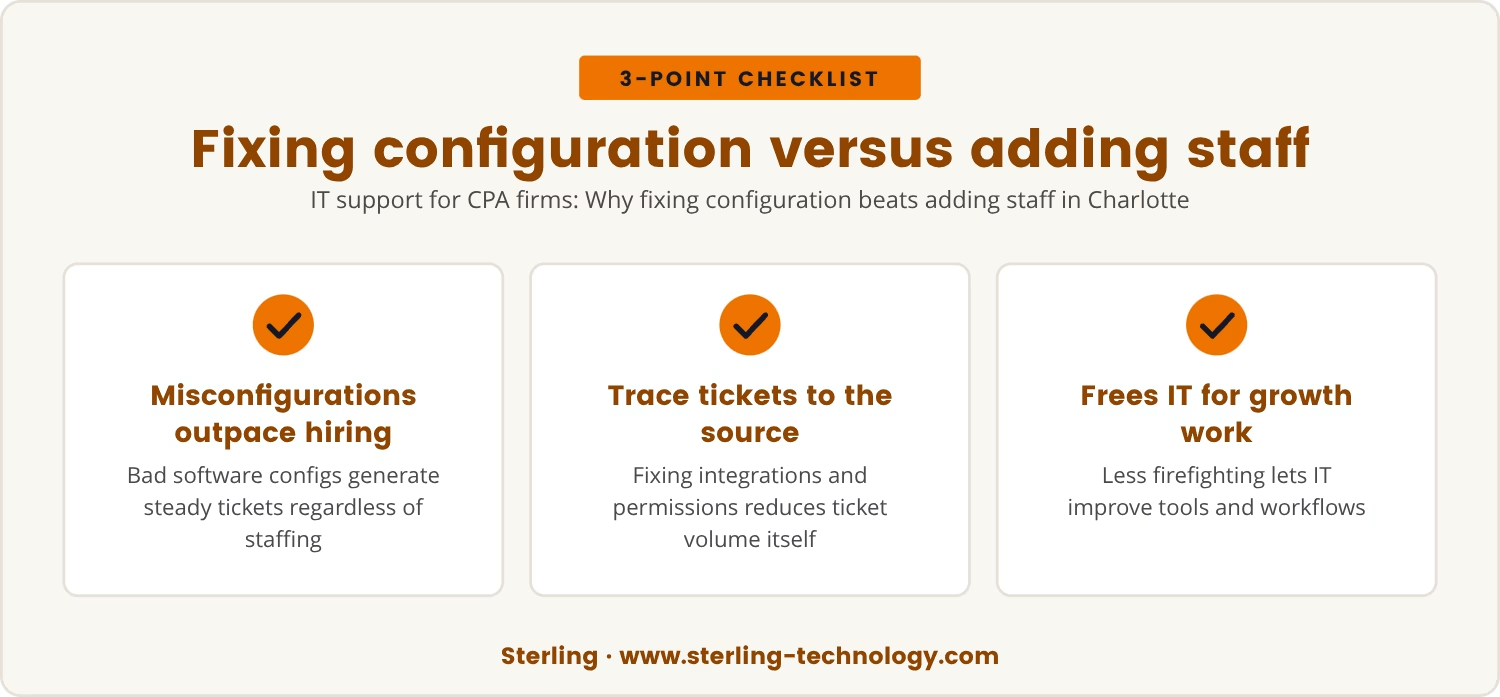
For CPA firms in Charlotte, tax season pressure is nothing new, and the usual response is the same: bring in more help desk staff to absorb the volume. That response, though, leaves the actual source of the tickets untouched.
A misconfigured piece of software generates a steady drip of tickets regardless of how many people are answering them, since each new hire can only handle so many calls before the volume simply outpaces them. Trace the tickets back to their source instead — outdated integrations, wrong permission settings, faulty software defaults — and the number of tickets itself starts to fall.
That shift does more than cut costs. It frees the IT team from constant reaction, giving them room to help the firm adopt better tools, refine workflows, and support the kind of growth that firefighting never allows for.
What actually happens when you fix the root cause (and what doesn’t)
Fixing the root cause changes the day-to-day shape of IT work, and the shift follows a fairly consistent sequence.
Identifying the true source
The process starts by tracing recurring tickets back to where they actually originate — often a misconfigured accounting application, a permissions error, or a software update that never got applied.
Applying a permanent fix
With the source identified, the IT team or managed service provider applies a fix aimed at that core issue, whether that means updating software, adjusting settings, or revising permissions.
Monitoring for results
Once the fix is in place, ticket volume gets tracked to confirm the issue is actually gone; a genuine fix shows up as a real, measurable drop in related tickets.
Training and documentation
The fix then gets documented, and staff get trained on it where needed, so the same misconfiguration doesn't quietly creep back in through a knowledge gap.
What doesn’t happen
There's no need to hire extra staff for the same issue next year, no repeat appearance of the problem, and no support team stuck redoing the same work on a loop.
Signs your firm is stuck in the seasonal support cycle
Plenty of CPA firms are caught in this loop without realizing it. A few signs tend to give it away:
- Recurring tickets: The same software or login issues appear every tax season.
- Growing support teams: More help desk staff get hired each year, yet ticket volume never drops.
- Temporary fixes: Issues get patched quickly but never truly resolved.
- High training costs: New hires need constant onboarding for the same recurring problems.
- Staff frustration: The team feels perpetually reactive, never able to get ahead of it.
Recognize more than one of these, and it's a fair sign the firm is paying, again, for a problem it already paid to fix.
Why configuration issues are so common in accounting firm IT services
Accounting firms run on a tangle of tax software, accounting applications, and cloud services that all have to work in sync, and even one small misconfiguration in that mix can cause outsized trouble once deadlines tighten.
Every software update, new compliance rule, or workflow change is a fresh chance for something to fall out of alignment. Without a standing process for reviewing configuration, those small cracks widen quietly until they become full disruptions right in the middle of tax season.
This is where firms using managed IT services for accounting tend to fare better, since these providers focus on proactive maintenance — catching the misalignment before it turns into a ticket rather than responding after the fact.
What to ask your support provider before next tax season
Breaking the cycle starts with asking better questions than "how many people do we need this year." Worth raising with a provider:
- What are the most common recurring tickets from last tax season?
- Have we traced these tickets back to their root cause?
- What permanent fixes have been applied, and how were they tested?
- How do we track whether issues return after they’re fixed?
- What’s our plan for reviewing and updating software configurations before busy periods?
Answering these honestly shifts the goal from managing problems toward actually removing them.
The long-term benefits of solving root causes
Fixing the real source of IT trouble pays off in more than a shorter ticket queue. Freed from constant firefighting, the support team can put its time toward projects that help the business grow rather than just keep it standing still.
Staff face fewer interruptions and less daily frustration, and clients notice the difference in smoother service, particularly under the pressure of tax season. IT costs, in turn, become more predictable, which opens room to invest in real improvements instead of covering the same emergency twice.
Breaking free of seasonal hiring and its recurring costs is, in that sense, a step toward a firm that runs leaner and holds up better under pressure.

How Sterling helps firms break the support cycle
Many CPA firms with 20 to 80 employees find themselves hiring extra support each tax season, only to face the same technical issues again the next year. At Sterling, we know how frustrating it is to spend time and money on problems that never seem to go away.
We invite you to see how our team approaches root cause analysis and long-term solutions, so you can focus on your business instead of recurring IT headaches.
Want faster resolution for recurring IT issues?
Get an average response and resolution time of only 30 minutes when you qualify for Sterling’s support—so your team spends less time waiting and more time working.
Frequently asked questions
How can we tell if our IT support issues are caused by configuration problems?
Watch for patterns in the ticket history: the same issue resurfacing at the same busy times almost always points to a configuration fault rather than bad luck. A review of the accounting software and system settings by the IT team should confirm the underlying cause.
What’s the difference between managed IT services and hiring extra help desk staff?
Managed IT services deliver ongoing, proactive maintenance and updates to the systems themselves, while extra help desk staff only add capacity to answer tickets faster without touching what's causing them.
How do we make sure our accounting applications are set up correctly?
A provider can review software settings, integrations, and user permissions directly, and regular audits paired with clear documentation catch small issues before they escalate into major ones.
Why do support services for accounting firms focus on root cause analysis?
Root cause analysis removes recurring issues rather than answering them repeatedly, which cuts down on support volume over time and frees the team to be more productive elsewhere.
What should we include in our IT review before tax season?
A solid review checks tax software for pending updates, audits user access, tests integrations, and confirms the cloud environment is running cleanly — covering these areas head-off most of the common support issues before they start.

Landon Carter
Outside of work I enjoy traveling with my wife and son, helping coach little league baseball teams, and cheering on the Carolina Panthers.


